

Digital transformation isn't about buying more software. It's about making your existing technology, people, and processes work together to deliver better public services.
Imagine a City Clerk processing a building permit.
An application arrives by email. The applicant's information is entered into a municipal system. Supporting documents are saved separately. An inspection needs to be scheduled. Staff update a spreadsheet to track progress and send follow-up emails to keep everyone informed.
Each step may seem manageable on its own.
But multiply this process across dozens or hundreds of applications, requests, and departments. Suddenly, employees are spending a significant part of their working day managing information instead of serving residents.
The problem isn't necessarily that your municipality lacks software. It's that the systems and processes you already have may not be working together.
When municipal departments rely on separate tools, information becomes scattered across spreadsheets, emails, paper files, calendars, and databases.
This creates more than an administrative inconvenience. It can affect the municipality's overall efficiency, operating costs, and quality of public service.
Here are some common challenges:
The consequences extend beyond the administrative team.
When employees spend more time correcting errors, searching for records, and coordinating disconnected processes:
Ultimately, disconnected workflows can make it more expensive and difficult for local governments to deliver the services their communities depend on.
Digital transformation starts by examining everyday municipal workflows and asking a simple question:
Which steps can be connected, simplified, or automated?
Consider municipal scheduling.
A City Clerk may manage meetings and appointments using Outlook Calendar while maintaining municipal records in a separate system. When these tools don't work together, employees may need to enter information multiple times, manually check schedules, and communicate updates between departments.
A better-connected workflow can reduce repetitive administrative tasks, improve information consistency, and help employees coordinate their work more efficiently.
The same principle applies to:
The objective isn't simply to digitize every manual step. It's to rethink how work gets done so information flows more efficiently, processes are consistent, and employees can focus on activities that add value to their communities.
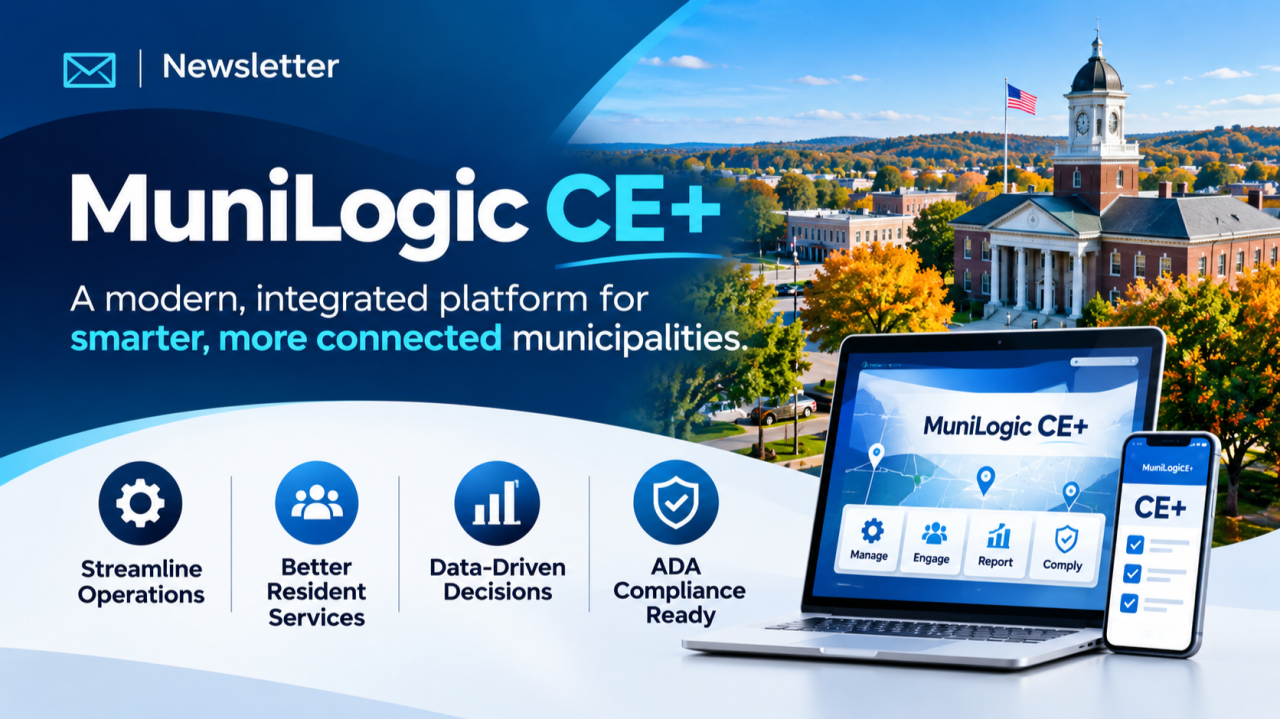
MuniLogic CE+ supports local governments in modernizing their municipal operations through technology designed around their everyday administrative needs.
With capabilities such as electronic building permits, MuniInspect and its mobile inspection app, and connected municipal information, municipalities can work toward more organized and efficient processes.
By improving how information is managed and how different municipal activities are handled, local governments can reduce unnecessary administrative work, improve access to information, and give employees more time to focus on serving residents.
Digital transformation isn't about replacing everything you already have. It's about identifying what isn't working and making practical improvements that deliver meaningful results.
Before investing in another software solution or redesigning an entire department, ask your team:
The answers can help identify where improvements will make the biggest difference.
The real value of digital transformation isn't measured by how much technology a municipality owns. It's measured by how effectively that technology helps employees work, how efficiently public resources are used, and how well residents are served.
Is your municipality ready to move from disconnected tasks to connected workflows?
Source: Read on LinkedInDon't miss out! Subscribe to MuniLogic's newsletter for the latest news, updates, trends, blogs, case studies, and tips to help your local government stand out.